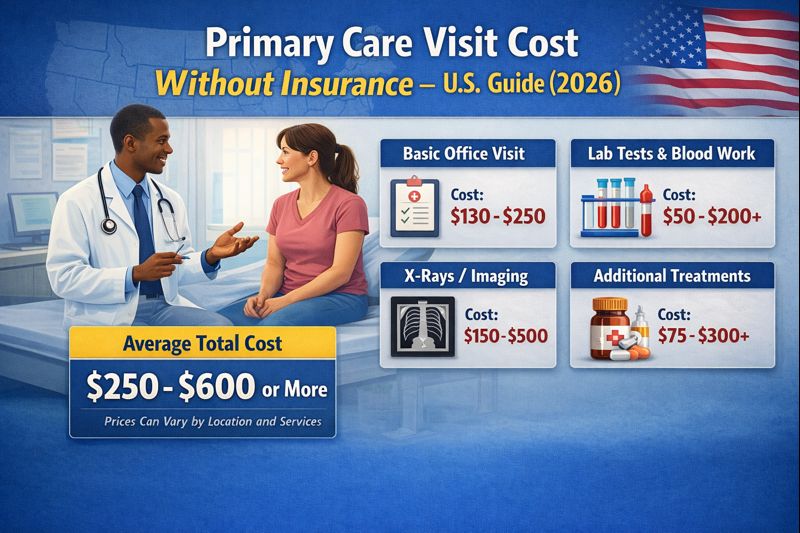
If you’re uninsured or paying cash, understanding primary care visit cost without insurance can help you plan your budget and avoid billing surprises. In the U.S. in 2026, out‑of‑pocket prices vary widely based on location, provider type, and whether tests or procedures are included.
Unlike insured visits with predictable copays, uninsured patients often pay full service charges — which can be significantly higher than insurance‑negotiated rates. This guide breaks down typical price ranges, what drives costs up or down, and smart ways to access care affordably when you’re self‑paying.
Quick Answer
A basic primary care visit without insurance in the U.S. Commonly costs about $100 to $300+ in 2026, with averages close to $150–$250 depending on location and provider. Inclusive tests or imaging raise the total.
TL;DR
• Typical uninsured primary care visit: ~$100–$300+
• Virtual visits often cheaper: ~$50–$100
• Walk‑in clinics: ~$60–$90
• Urgent care (non‑ER): ~$150–$280
• Additional labs/tests add to total
How Much a Primary Care Visit Usually Costs
• Most uninsured primary care visits cost about $100–$300+.
• Some clinics charge $70–$300 just for the doctor’s visit.
• Annual physical exams without insurance often average around $400 including basic checks.
• Price can vary greatly by city or state.
• New patient evaluations may cost more than established patient follow‑ups.
• Adding tests (blood work, imaging) increases your bill further.
• Prices in big metro areas tend to be higher than rural clinics.
• Clinics often publish self‑pay price lists online.
• Asking for a cash discount can lower self‑pay pricing.
• Routine preventive care may qualify for reduced pricing.
• Walk‑in clinics may cost ~$60–$90 for minor issues.
• Telehealth visits often run $50–$100 without insurance.
What’s Included in the Visit Cost
• Provider consultation fee.
• Vital signs and basic exam.
• Chronic condition check‑ins.
• Preventive screenings (may be extra).
• Diagnostic tests like blood panels add charges.
• Vaccinations can be separate fees.
• Any prescriptions written do not include pharmacy costs.
• Office administrative or facility fees.
• Additional counseling or procedures incur extra charges.
• Unanticipated findings can lead to follow‑ups or referrals.
• Telehealth includes provider time but no facility fee.
• Price transparency policies help patients ask ahead.
Factors That Influence Cost
• Geographic region cost differences.
• Clinic type (private vs community health center).
• Provider credentials (MD vs NP/PA).
• Visit complexity and reason for care.
• Equipment and tests used.
• New patient vs returning patient status.
• Negotiated cash payments may be lower.
• Local cost of living influences pricing.
• Walk‑in clinics often list flat fees.
• Telehealth varies by platform.
• Seasonal demand or health events (flu season) can affect scheduling costs.
• Community clinic sliding scales base price on income.
Cheapest Ways to See a Doctor Without Insurance
• Telehealth visits typically start ~$50–$100.
• Walk‑in or retail clinics often ~$60–$90.
• Community health centers offer income‑based sliding scale pay.
• Title X and family planning clinics may offer low‑cost care.
• Urgent care is cheaper than ER for non‑emergencies.
• Negotiating fees before care can reduce costs.
• Cash payment discounts available at some offices.
• Ask for a good faith estimate ahead of time.
• Use telemedicine for minor issues to cut costs.
• Health fairs may offer free basic screenings.
• Preventive visits may be cheaper at certain sites.
• Some nonprofit clinics provide care for very low cost.
Telehealth vs. In‑Person Visit Costs
• Telehealth usually $50–$100 for primary care consult.
• In‑person visits generally cost $100–$300+.
• Telehealth saves travel time and overhead fees.
• Some platforms price first consults lower.
• Not all conditions can be handled virtually.
• Follow‑ups may remain inexpensive online.
• Telehealth excludes labs or imaging on site.
• Urgent issues still need in‑person care.
• Many providers list flat telehealth fees online.
• Insurance isn’t required for either.
• Compare platforms to pick best price.
• Some services offer membership discounts.
Urgent Care Instead of Primary Care
• Urgent care often costs $150–$280 without insurance.
• It’s cheaper than ER but usually pricier than basic primary care.
• Good for after‑hours or sudden issues.
• Some urgent clinics list self‑pay flat fees.
• Labs or imaging at urgent care add to cost.
• Walk‑in costs vary by region.
• Ask for price list before treatment.
• Not ideal for chronic care management.
• Primary care builds ongoing health history.
• Urgent care staff focus on quick issues.
• Pediatric urgent care charges can differ.
• Many clinics accept cash with no insurance.
Tips to Lower Your Self‑Pay Cost
• Ask for a good faith estimate before your visit.
• Negotiate provider fees up front.
• Choose lower‑cost clinic types.
• Use telehealth when suitable.
• Get price lists ahead of time.
• Pay cash to access discounts.
• Bundle services to reduce separate fees.
• Time visits for off‑peak hours.
• Skip ER for non‑urgent needs.
• Use community programs for free screenings.
• Compare providers before booking.
• Bring previous records to shorten visit time.
FAQs
How much is a primary care visit without insurance in 2026?
Typical U.S. self‑pay primary care visits cost about $100–$300+, with variation by region and services included.
Can I negotiate the doctor’s visit price?
Yes — many providers offer cash discounts or fee negotiation if you ask before care.
Are telehealth visits cheaper without insurance?
Often, yes — telehealth typically runs $50–$100 for uninsured primary care consults.
What’s the difference between urgent care and primary care costs?
Urgent care is usually a bit pricier at ~$150–$280 than basic primary care visits without insurance.
Do community health centers cost less?
Yes — community clinics often use sliding scale or income‑based fees to reduce charges.
Conclusion
Understanding the primary care visit cost without insurance helps you make informed choices when seeking healthcare. In 2026, U.S. prices still vary widely, but typical self‑pay visits fall in the $100–$300+ range. Use telehealth, walk‑in clinics, or community programs to reduce out‑of‑pocket charges, and always ask for estimates before care. Knowing your options keeps both your health and your budget in better shape.

Hi, this is a comment.
To get started with moderating, editing, and deleting comments, please visit the Comments screen in the dashboard.
Commenter avatars come from Gravatar.