Introduction
Earning a degree online is becoming an increasingly popular choice for students, especially in 2025 and 2026. With the flexibility to study from anywhere, online education offers a convenient alternative to traditional in-person classes. However, the cost of earning a degree online can vary widely. Whether you’re considering an online bachelor’s, master’s, or certificate program, understanding the total costs—tuition, fees, and additional expenses—is key to making an informed decision. In this article, we’ll break down the costs of online degrees and offer tips for finding affordable options.
Quick Answer
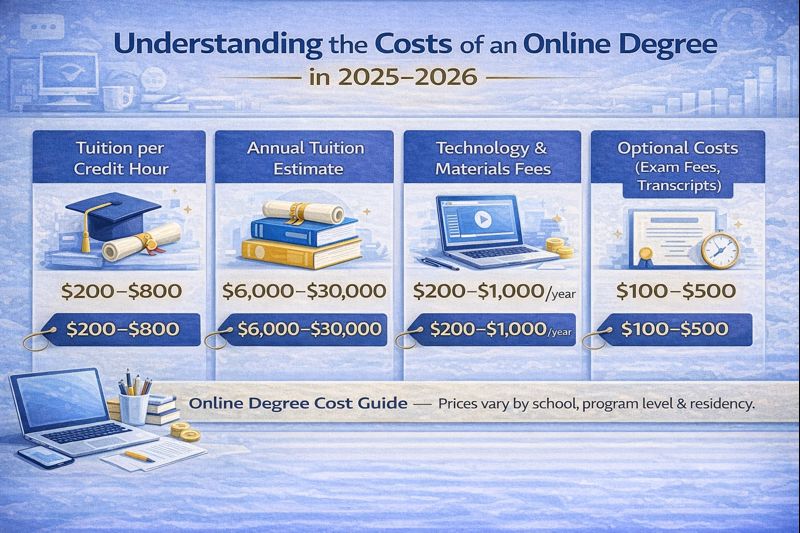
The cost of an online degree in 2025-2026 generally ranges between $10,000 and $30,000 per year. Costs vary depending on factors like the institution (public vs. private), degree level, and additional fees such as technology, textbooks, and graduation costs.
TL;DR
• Online degrees can cost between $10,000 and $30,000 per year.
• Public universities are often more affordable than private ones.
• Hidden costs include textbooks, tech fees, and other supplies.
• Financial aid is available through scholarships, loans, and employer assistance.
• Some online programs offer pay-as-you-go options.
1. Factors Affecting the Cost of Online Degrees
Several factors influence the cost of earning an online degree, including:
• Institution Type: Public universities are generally more affordable than private ones.
• Degree Level: Bachelor’s, master’s, and doctoral programs each have different price ranges.
• Program-Specific Fees: Some programs may charge additional fees for technology, exams, or specialized materials.
• Duration of Program: Longer programs typically result in higher overall costs.
• Residency Status: In-state students may pay less in tuition than out-of-state or international students.
2. Average Tuition Rates for Online Bachelor’s Degrees
For online bachelor’s degrees, students can expect to pay:
• Public Universities: Average tuition is about $10,000 to $15,000 per year.
• Private Institutions: Tuition for online bachelor’s degrees at private institutions can range from $20,000 to $30,000 per year.
• Many public schools offer in-state students lower tuition rates, but out-of-state students often face higher costs.
3. Cost Breakdown for Online Master’s Degrees
Online master’s degrees typically cost more than bachelor’s programs:
• Public Universities: Tuition usually falls between $12,000 to $20,000 annually.
• Private Institutions: Private universities may charge anywhere from $20,000 to $40,000 per year.
• Specializations such as business, engineering, and healthcare often come with a higher price tag.
4. Hidden Costs of Online Degrees
While the main tuition is often the largest cost, online students should also factor in:
• Textbooks and Materials: Many courses require textbooks, software, and other learning materials.
• Technology Fees: Some programs charge fees for the use of online platforms or software tools.
• Examination Fees: Some degrees require proctored exams, which can come with a fee.
• Graduation Fees: Don’t forget about fees associated with applying for graduation or receiving your diploma.
5. Financial Aid Options for Online Students
There are several ways to make online degrees more affordable:
• Scholarships: Many schools offer scholarships specifically for online learners.
• Federal Financial Aid: Online students can apply for federal loans and grants.
• Employer Assistance: Some employers offer tuition reimbursement programs for employees seeking higher education.
• Private Loans: If needed, students can explore private loan options, but always consider the interest rates and repayment terms.
6. How to Find Affordable Online Degree Programs
To find affordable online degree programs, students should:
• Research Accreditation: Always choose accredited institutions to ensure quality education.
• Compare Costs: Look at tuition rates, fees, and other costs before committing to a program.
• Use Financial Aid Tools: Take advantage of financial aid tools and calculators to estimate potential costs.
• Look for Discounts: Some universities offer reduced tuition for online students, or have seasonal scholarships available.
7. Online Degrees vs. Traditional Degrees: Cost Comparison
Online degrees offer several cost-saving benefits:
• Living Costs: Students save money on housing and commuting.
• Flexible Schedules: Online programs often allow students to work while studying, which can help offset costs.
• Traditional Degrees: These usually include on-campus fees, such as room and board, which can increase overall expenses.
8. Online Degree Cost by Field of Study
The cost of online degrees also depends on the field of study:
• Business Degrees: Online MBAs are among the most expensive, with tuition ranging from $20,000 to $60,000.
• Technology Programs: IT degrees can vary greatly, but they often cost around $12,000 to $25,000 per year.
• Healthcare Degrees: Online nursing programs and other healthcare-related degrees are typically priced between $15,000 and $30,000 annually.
9. International Students: How Online Degree Costs Differ
International students may face higher costs:
• Increased Tuition: Out-of-state and international students often pay higher tuition fees.
• Exchange Rates: Currency exchange rates may further affect the cost of tuition.
• Financial Aid: International students should check whether they qualify for financial aid, as it varies by country and school.
10. Top Affordable Online Universities for 2025-2026
Some of the most affordable online degree programs are offered by:
• University of the People: Offers free tuition for undergraduate degrees, with students only paying exam fees.
• Western Governors University: Known for its affordable rates and flexible online programs.
• University of Florida Online: Offers affordable bachelor’s and master’s degrees with financial aid options.
11. Pay-as-You-Go Online Degree Programs
Some institutions allow students to pay for their degree as they progress:
• Flexible Payments: Students can pay for each semester or course rather than a lump sum.
• Benefit: This approach reduces upfront costs and spreads payments out over time.
12. The Pros and Cons of Online Degrees in Terms of Cost
Pros:
• Lower overall costs due to lack of living expenses.
• Financial aid options available.
• Flexible schedules that allow students to continue working.
Cons:
• Some programs have hidden costs (textbooks, tech fees).
• Some fields, such as business or healthcare, are more expensive online.
13. The Impact of COVID-19 on Online Degree Pricing
The pandemic had a significant impact on tuition pricing for online degrees:
• Increased Demand: More students turned to online learning, increasing demand.
• Price Adjustments: Some universities raised prices for online courses, while others made adjustments to stay competitive.
14. Tips for Managing the Cost of an Online Degree
Managing costs involves strategic planning:
• Create a Budget: Keep track of tuition, fees, and other costs.
• Buy Used Textbooks: Save on materials by buying used or digital versions.
• Look for Free Learning Resources: Many programs offer free resources to complement your degree.
15. Can You Get Financial Aid for Online Degrees?
Yes, online students are eligible for federal financial aid, and many schools offer specific scholarships for online learners. Always check your school’s financial aid website for specific opportunities.
16. The Future of Online Degree Costs
As the demand for online education continues to grow, tuition prices may rise, but advancements in technology could help lower some costs. It’s important to stay updated on trends in online education pricing, as the landscape is evolving rapidly.
FAQs
1. How much does an online degree cost in 2025-2026?
An online degree typically costs between $10,000 and $30,000 per year, depending on the program and institution.
2. Are online degrees cheaper than traditional ones?
Online degrees can be more affordable due to the lack of campus fees and living expenses.
3. How can I find scholarships for online degrees?
Search for online-specific scholarships on university websites and external scholarship platforms.
4. Can I use financial aid for an online degree?
Yes, online students can apply for federal financial aid and other financial assistance.
5. Are there hidden costs with online degrees?
Yes, costs like textbooks, technology fees, and graduation fees should be factored in.
Conclusion
The cost of online degrees in 2025-2026 varies widely, but understanding the factors that affect tuition and fees can help you make an informed decision. By researching your options and considering all costs, you can find an online degree program that fits your budget and career goals.