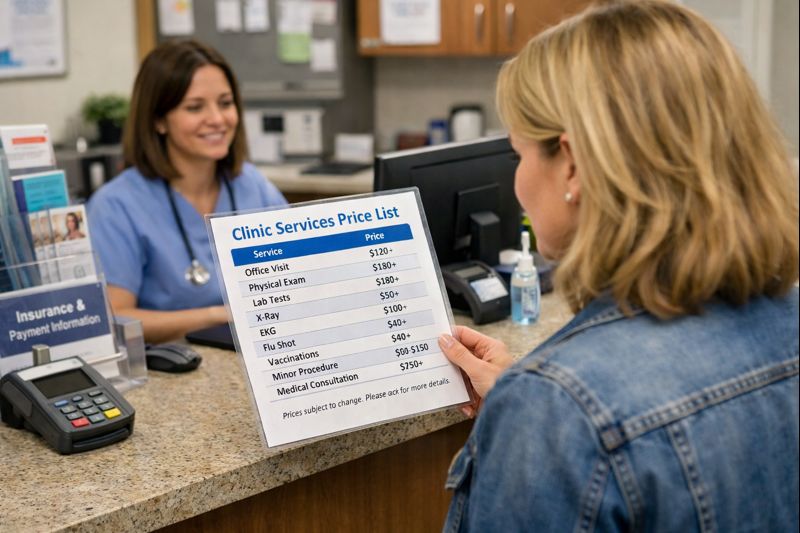
If you don’t have health coverage, knowing the clinic visit cost without insurance can feel confusing and stressful. Prices vary widely based on where you go, what you need, and even the time of day. In the U.S., self-pay patients often face different charges than insured patients, but there are also ways to plan ahead and lower your bill.
This guide explains real-world cash prices for primary care, urgent care, retail clinics, and telehealth in 2025–2026. You’ll also learn how add-ons like lab tests affect totals, how to request estimates, and where to find low-cost care. By the end, you’ll know what to expect and how to avoid surprise bills.
Quick Answer
Clinic visit cost without insurance typically ranges from $80 to $250 for a basic visit. Retail clinics and telehealth are often cheaper, while urgent care and emergency rooms cost more due to added services and facility fees.
TL;DR
• Most basic clinic visits cost under $200 cash
• Retail clinics offer flat, posted prices
• Urgent care adds fees for tests and timing
• Telehealth is cheapest for simple issues
• You can ask for estimates before treatment
How Much Does a Clinic Visit Cost Without Insurance
A clinic visit usually includes the provider’s time and basic exam. However, the final bill depends on what happens during the visit.
• Typical out-of-pocket visit fee covers evaluation only
• Self-pay prices are often lower than billed rates
• Cash price usually excludes labs or imaging
• New patient visits cost more than follow-ups
• Longer or complex visits increase charges
• Evening or weekend visits cost extra
• Urban clinics often charge higher rates
• Rural clinics may offer lower fees
• Same clinic can charge different prices
• Pediatric and adult visits differ
• Chronic condition visits cost more
• Preventive visits may be discounted
Average Self-Pay Prices by Clinic Type
Different care settings have very different pricing models. Knowing the average range helps you choose wisely.
• Walk-in clinic visits average $120–$200
• Primary care offices often charge $100–$180
• Retail clinics use flat fee pricing
• Telehealth visits cost $40–$90
• Urgent care averages $150–$250
• Specialists usually start above $200
• ER visits start in the thousands
• Flat fee clinics reduce surprise costs
• Price range reflects visit complexity
• Add-ons change final totals fast
• Clinic ownership affects pricing
• Location heavily influences averages
Primary Care Office Visit Costs for Cash Patients
Primary care is often the first stop for uninsured patients. Prices vary by patient status and visit type.
• Office visit fees range $100–$180
• Primary care new patient visits cost more
• Established patient visits cost less
• Short follow-ups may be discounted
• Annual physicals sometimes cost extra
• Chronic care visits take longer
• Preventive services may be bundled
• Small practices may negotiate prices
• Large systems may charge higher fees
• Payment due at time of visit
• Some clinics post cash prices
• Phone visits may cost less
Urgent Care Costs Without Insurance
Urgent care is convenient but more expensive than primary care due to staffing and equipment.
• Urgent care base visits cost $150–$250
• Visit complexity drives pricing
• After-hours visits cost more
• Weekend care increases charges
• X-rays add $50–$300
• Rapid tests add $20–$100
• Wound care raises total cost
• IV fluids increase pricing
• Medications given onsite cost extra
• Prices vary by chain and location
• Urgent care cheaper than ER
• Itemized bills often follow
Retail Clinics and MinuteClinic Self-Pay Prices
Retail clinics are among the most transparent options for uninsured care.
• Retail clinic visits cost $60–$150
• MinuteClinic posts service price lists
• Flat fees reduce billing surprises
• Limited services keep costs low
• Minor illnesses treated affordably
• Vaccines priced separately
• Chronic care management limited
• No appointments often needed
• Prices same nationwide within chains
• Payments due upfront
• Add-ons clearly listed
• Ideal for simple conditions
Telehealth Visit Costs Without Insurance
Virtual care has become a popular low-cost option for basic needs.
• Telehealth visits cost $40–$90
• Virtual visit pricing is predictable
• Online doctor visits save travel time
• Best for minor illnesses
• Prescriptions often included
• No facility fees charged
• Limited physical exams possible
• Labs require separate visits
• Same-day access common
• Prices lower than in-person clinics
• Evening availability varies
• Some platforms offer subscriptions
Specialist Visit Costs Without Insurance
Specialists charge more due to advanced training and longer visits.
• Specialist appointment costs $200–$400
• Consult fee higher for first visit
• Dermatology visits vary widely
• Cardiology visits cost more
• Orthopedic consults often expensive
• Diagnostic tests add significant costs
• Referrals may not reduce price
• Cash discounts sometimes offered
• Academic centers charge more
• Private practices more flexible
• Follow-ups cheaper than consults
• Imaging often billed separately
Lab Tests and Imaging Add-Ons: What They Cost
Tests are often billed separately and can double your visit cost.
• Lab tests add $20–$200 each
• Imaging costs depend on modality
• X-ray costs $50–$300
• Ultrasound costs $150–$500
• Blood panels vary by size
• Rapid tests cost less
• Send-out labs cost more
• Imaging centers cheaper than hospitals
• Ask for test necessity upfront
• Cash-pay labs offer discounts
• Results billed separately
• Multiple tests stack costs quickly
Prescription Costs After the Visit
Medications are a common second expense after care.
• Generic drugs cost far less
• Discount card reduces cash price
• Pharmacy prices vary widely
• Ask for low-cost alternatives
• 30-day supply cheaper upfront
• Mail-order options may help
• Brand-name drugs cost more
• Coupons sometimes available
• Retail pharmacies price-match
• Prescriptions billed separately
• Samples may reduce cost
• Ask provider about pricing
How Location and Timing Change What You Pay
Where and when you get care affects pricing more than many expect.
• Regional pricing differs significantly
• Urban clinics charge higher fees
• Rural clinics often cheaper
• After-hours visits cost more
• Holiday visits increase charges
• High-demand seasons raise prices
• Tourist areas charge premiums
• State regulations vary
• Facility fees differ by system
• Staffing costs affect pricing
• Weekend hours add surcharges
• Local competition lowers prices
How to Ask for a Good Faith Estimate
Uninsured patients have the right to price transparency.
• Good faith estimate available for self-pay
• No Surprises Act supports estimates
• Ask before scheduling care
• Request written itemized estimate
• Include visit, labs, imaging
• Estimates must be realistic
• Compare estimate to final bill
• Dispute large differences
• Keep documentation
• Billing office handles requests
• Estimates don’t guarantee totals
• Follow up after visit
How to Price-Check Before You Go
A few calls or tools can save hundreds.
• FAIR Health shows typical local prices
• Cost estimator tools help planning
• Call clinic billing office directly
• Ask for cash price
• Confirm add-on costs
• Ask about discounts upfront
• Compare nearby clinics
• Check retail clinic price lists
• Use telehealth when appropriate
• Avoid hospital-owned clinics
• Ask about payment timing
• Document quoted prices
Self-Pay Discounts, Prompt-Pay, and Payment Plans
Many clinics reduce costs for upfront payment.
• Prompt-pay discounts common
• Self-pay discount often 10–40%
• Ask before billing posts
• Payment plans spread costs
• Financing options vary
• Nonprofit clinics more flexible
• Large systems less negotiable
• Hardship discounts may apply
• Always ask politely
• Get agreements in writing
• Pay early to save more
• Follow billing deadlines
Community Health Centers and Sliding-Scale Fees
These centers provide affordable care regardless of insurance.
• Community health center visits cost less
• Sliding fee scale based on income
• Income-based pricing requires documents
• Federal funding supports lower costs
• Primary care services offered
• Preventive care emphasized
• Some specialty services available
• Dental and mental health included
• Appointment wait times longer
• Quality comparable to private clinics
• Find centers via HealthCare.gov
• Proof of income required
When the ER Is Required and What It Can Cost
Emergency rooms are for true emergencies only.
• Emergency room visits start $1,000+
• EMTALA requires emergency treatment
• Facility charge drives cost
• Physician fees billed separately
• Imaging dramatically increases totals
• Labs billed independently
• Not for routine care
• Urgent care often cheaper
• Separate bills common
• Payment plans sometimes available
• Financial assistance may apply
• Use ER only when necessary
What to Do If You Can’t Pay the Clinic Bill
Unpaid bills don’t have to derail your finances.
• Ask about financial assistance
• Apply for charity care
• Request itemized bills
• Negotiate medical debt
• Set up payment plans
• Avoid ignoring bills
• Nonprofit hospitals offer help
• Community clinics assist with paperwork
• Medical debt laws vary by state
• Seek billing advocates if needed
• Keep all records
• Act early for best results
FAQs
How much does a doctor visit cost without insurance?
Most doctor visits cost $100–$180 for basic care. Complex visits cost more.
How much does urgent care cost without insurance?
Urgent care typically costs $150–$250, not including tests or imaging.
How much is a primary care visit without insurance?
Primary care visits usually range from $100–$180 cash.
How much does a telehealth visit cost without insurance?
Telehealth visits often cost $40–$90 for simple concerns.
Can I get a good faith estimate if I’m self-pay?
Yes. Clinics must provide a good faith estimate upon request.
Where can I get low-cost care without insurance?
Community health centers and retail clinics offer affordable options.
Conclusion
Understanding the clinic visit cost without insurance helps you avoid surprises and choose the right care setting. By comparing options, asking for estimates, and using low-cost clinics, you can get quality care without overpaying.