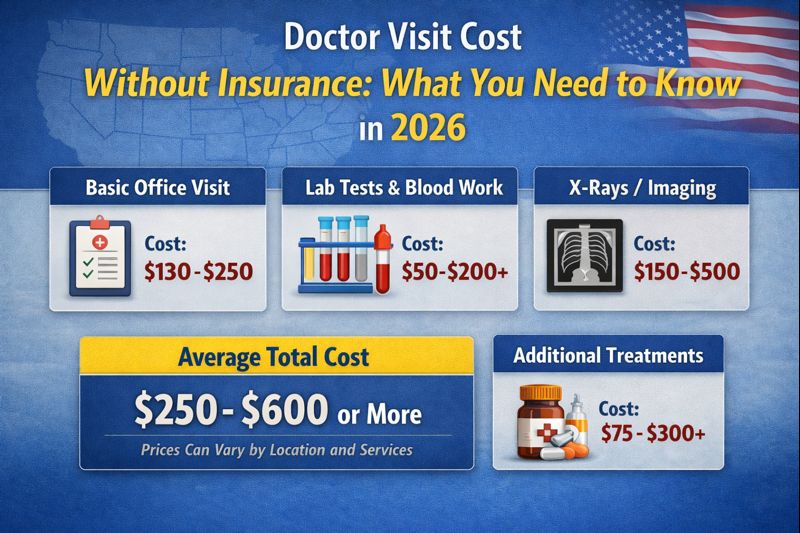
A doctor visit cost without insurance can vary widely across the United States, influenced by factors like the type of doctor, location, and the complexity of the visit. Whether you’re seeking a general consultation, specialist advice, or telehealth services, it’s important to know what to expect in terms of pricing. In this article, we will provide a comprehensive overview of the average costs, how they differ by service type, and tips on managing these costs when you don’t have insurance.
Quick Answer
The cost of a doctor visit without insurance typically ranges between $100 and $600 for general consultations. Visits with specialists, urgent care, or telehealth services might cost more. Prices can vary depending on location, type of care, and additional services (like lab tests or imaging).
TL;DR
• Standard doctor visits (no insurance): $100–$300+
• Specialist visits (no insurance): $150–$600+
• Telehealth visits: $50–$200
• Urgent care: $125–$300
• Costs differ based on location, service type, and complexity.
What Influences the Cost of a Doctor Visit Without Insurance?
Several factors affect the cost of doctor visits without insurance:
• Location: The cost varies by city, with big cities often being more expensive than rural areas.
• Service Type: Basic visits typically cost less, while specialists or more complex procedures will drive up the price.
• Additional Services: Testing, imaging, and other treatments will add to your bill.
• Provider: Whether you visit a primary care doctor, specialist, or urgent care center impacts the overall cost.
Types of Doctor Visits and Their Average Costs
Primary Care Visits
The cost of seeing a primary care doctor without insurance typically ranges from $100 to $300. This fee usually covers a basic consultation, including physical exams and general assessments. If your visit includes lab work or additional testing, the cost may rise significantly.
Competitor Insights:
• BetterCare reports that primary care visits usually cost between $100–$300 without insurance (source).
• Debt.org estimates these visits to cost around $80–$170, depending on the location and doctor. (source)
Specialist Visits
Specialist visits tend to be more expensive than primary care visits. Expect to pay anywhere between $150 to $600 depending on the type of specialist you see and the complexity of the visit. For example, seeing a cardiologist or orthopedist can be on the higher end of this range.
Competitor Insights:
• TalkToMira notes that specialist visits are typically in the $150–$600 range for an uninsured patient (source).
• BetterCare confirms the same cost range for specialists (source).
Urgent Care Visits
When you need urgent care but don’t have insurance, expect to pay around $125 to $300 for a visit. This includes consultations and basic treatment for non-life-threatening conditions like minor injuries or infections. More complicated care will drive the price up.
Competitor Insights:
• Baldwin.com and GoodRx both show urgent care centers typically charge between $125 and $300 for a visit. (source, source)
Telehealth or Virtual Visits
Telehealth has become an increasingly popular and affordable option for those without insurance. These virtual doctor visits generally cost between $50 and $200, depending on the complexity of your needs. While these are often more affordable than in-person visits, the cost can still vary based on the provider and service required.
Competitor Insights:
• DoctorOnDemand charges around $99 for telehealth consultations without insurance (source).
• BetterCare also reports telehealth visits generally fall within the $50–$200 range. (source)
Other Costs to Consider
In addition to the basic consultation fees, you may be charged for other services during a visit:
• Lab tests: Blood work or urine tests can cost between $100 and $500 depending on what’s needed.
• Imaging: X-rays or MRIs can significantly increase the cost of your visit. For example, an X-ray could cost between $100 and $1,000, while an MRI might be $400–$3,500 depending on the facility.
• Vaccines: Common vaccines, such as the flu shot, may cost between $20 and $60 without insurance.
Tips to Reduce Doctor Visit Costs Without Insurance
While visiting a doctor without insurance can be costly, there are ways to manage and reduce your medical expenses:
• Ask for a Good-Faith Estimate: Request a price estimate for your visit in advance to avoid surprise charges.
• Consider a Community Health Center: Federally qualified health centers offer lower-cost care, including primary and preventative services.
• Look for Sliding Scale Fees: Many doctors’ offices and clinics offer sliding scale fees based on your income level.
• Check for Discounts or Payment Plans: Some providers offer discounts for paying in full at the time of service, or they may provide payment plans to help manage the cost.
FAQs
How much does a visit to the doctor cost without insurance?
On average, a doctor visit without insurance can cost between $100 and $600. Costs vary based on the type of care you need and the location.
Can I see a doctor without insurance?
Yes, many healthcare providers accept self-paying patients. You can visit a primary care doctor, specialist, or even go to an urgent care facility without insurance.
Are telehealth services cheaper than in-person visits?
Yes, telehealth services typically cost between $50 and $200, which is often less than in-person visits that can cost $100 to $600 or more.
How much does urgent care cost without insurance?
An urgent care visit typically costs between $125 and $300 for basic treatment, but costs can rise with more complicated procedures.
What other costs can I expect during a doctor visit without insurance?
In addition to the consultation, you may be charged for lab tests, imaging, and vaccines, all of which can add several hundred dollars to your bill.
Conclusion
Understanding the cost of a doctor visit without insurance is crucial for making informed healthcare decisions. While the prices can vary based on several factors, such as the type of doctor and location, being prepared can help reduce unexpected costs. Whether you choose a telehealth visit, urgent care, or a primary care consultation, there are ways to manage and potentially reduce the financial burden of medical care without insurance.