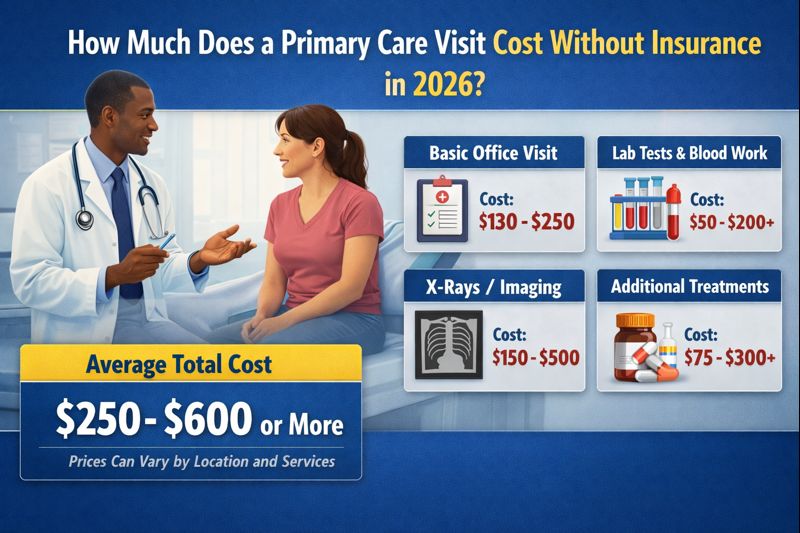
Visiting a primary care doctor is a common healthcare need for many individuals, but primary care visit costs without insurance can be a significant concern. Without insurance coverage, a simple check-up, consultation, or treatment can cost anywhere from $100 to $500 or more, depending on the location and services involved. However, there are a variety of alternatives and cost-saving methods, such as sliding-scale clinics and telehealth options, that can help reduce these expenses. Understanding the potential costs of primary care visits without insurance can help you plan ahead and make more informed choices about your healthcare.
Quick Answer
A primary care visit without insurance typically costs $100 to $400, with $150 being the average for a standard consultation. Additional fees for tests, labs, and treatments may apply.
TL;DR
• A primary care visit without insurance can cost $100 to $400.
• Sliding-scale clinics can provide lower-cost options for uninsured patients.
• Telehealth consultations are often more affordable, around $50 to $100.
• Urgent care visits may be slightly more expensive than primary care visits.
• Additional charges may apply for tests, labs, and treatments.
• Negotiating with doctors or clinics can sometimes reduce costs.
• Some community health centers offer free or low-cost services for uninsured individuals.
How Much Does Primary Care Cost Without Insurance?
The cost of a primary care visit without insurance can vary depending on several factors, including the doctor’s office location, the complexity of the visit, and whether you require additional tests or treatments. Here’s a breakdown of what you might expect:
- Basic Consultation: On average, the cost of a basic consultation with a primary care doctor will range from $100 to $250. In some cases, this could go as high as $500 for a more comprehensive exam, especially in urban areas or for specialized care.
- Physical Exams: An annual physical exam without insurance generally costs between $150 and $400, though prices can reach higher amounts depending on what tests are included.
- Additional Services: Any necessary tests, lab work, or procedures may add to the final bill. For example, lab tests can add $50 to $200, and imaging (like X-rays) might cost between $100 to $500.
Why is Doctor Care Expensive Without Insurance?
Without insurance, you’re responsible for covering the full cost of the visit. Several factors contribute to the high cost of healthcare for the uninsured:
- Lack of Negotiated Rates: Insurance companies negotiate discounts with healthcare providers, but without insurance, individuals pay the full price.
- Higher Overhead Costs: Doctors and clinics often charge higher rates to cover their operational costs, including staff, equipment, and other expenses.
- Additional Fees: Extra services like lab tests, diagnostic imaging, and specialist referrals add to the total cost of the visit.
Affordable Alternatives to Primary Care Visits Without Insurance
There are ways to reduce the financial burden of a primary care visit when you don’t have insurance. Here are some of the most effective alternatives:
- Sliding Scale Clinics: Many community clinics offer a sliding scale, meaning they adjust their fees based on your income. These clinics are designed to provide affordable care for uninsured or underinsured individuals.
- Telehealth: Telehealth services offer virtual consultations with doctors, often at a fraction of the cost of an in-person visit. Telehealth consultations typically range from $50 to $100, making it a more affordable option for general health concerns.
- Community Health Centers: Some local health centers offer free or low-cost services for uninsured individuals. These centers are often funded by government programs to ensure healthcare access for all.
- Urgent Care: While urgent care centers can sometimes be more expensive than primary care visits, they can offer quick treatment for non-emergency issues, typically ranging from $100 to $250.
- Retail Clinics: Retail chains like CVS, Walmart, and Walgreens operate health clinics that offer affordable services, such as basic check-ups, vaccinations, and minor treatments. These services generally cost between $50 to $150.
Can You Negotiate Medical Prices Without Insurance?
Yes, in some cases, you can negotiate medical prices even if you’re uninsured. Here’s how:
- Ask for a Good-Faith Estimate: Under recent regulations, healthcare providers are required to give patients an estimate of their costs in advance. You can use this to understand what to expect and negotiate for a better deal.
- Ask About Discounts: Some clinics or providers may offer a discount for patients who pay in cash upfront or who are uninsured. Don’t hesitate to ask if there are any such options.
- Negotiate Lab and Imaging Fees: If your visit includes lab work or imaging, contact the lab or imaging center directly to negotiate a better price, as these services are often marked up significantly.
Common Medical Services and Their Costs
Here’s a closer look at some common services you might receive during a primary care visit and their costs without insurance:
- Consultation/Visit: $100 to $300
- Physical Exam: $150 to $400
- Blood Tests: $50 to $150
- X-ray Imaging: $100 to $500
- Vaccinations: $20 to $200
- Prescription Medications: $10 to $200, depending on the drug
Telehealth: An Affordable Option for Uninsured Patients
Telehealth services, which allow you to consult with a doctor remotely, have become an increasingly popular option for people who don’t have insurance. These consultations tend to be far more affordable than in-person visits, with prices typically ranging from $50 to $100. Many telehealth services provide access to licensed medical professionals who can handle general consultations, prescribe medications, or provide referrals for more specialized care.
Primary Care Visit Cost by State
The cost of a primary care visit without insurance can vary significantly depending on where you live. In larger cities or states with a higher cost of living, the price tends to be on the higher end, while more rural or underserved areas might offer more affordable rates.
For example:
- In California, the average cost for a primary care visit without insurance is approximately $150–$300.
- In Texas, you might expect to pay anywhere from $100 to $250 for a standard consultation.
- In Florida, the cost can range from $120 to $270, with many clinics offering sliding-scale payments.
Frequently Asked Questions (FAQs)
1. How much does a primary care visit cost without insurance?
The cost typically ranges from $100 to $400 for a basic consultation, with additional costs for tests and treatments. Prices can vary based on location and the doctor’s office.
2. What is a sliding-scale clinic?
A sliding-scale clinic adjusts the cost of medical services based on your income. These clinics are a great option for uninsured individuals looking for affordable care.
3. Can I use telehealth services without insurance?
Yes, telehealth services are an affordable option for uninsured individuals. Consultations typically cost $50 to $100, and you can address a wide range of health concerns remotely.
4. Are there free clinics for uninsured patients?
Yes, some community health centers offer free or low-cost services for uninsured individuals. It’s important to check with your local health department to find options near you.
5. Can I negotiate the cost of a doctor visit if I don’t have insurance?
Yes, in many cases, you can negotiate medical prices by asking for a good-faith estimate, requesting a discount for paying upfront, or directly negotiating fees for lab tests or imaging.
Conclusion
While primary care visits without insurance can be costly, there are various ways to reduce the financial burden. Options such as sliding-scale clinics, telehealth, and community health centers can help make healthcare more affordable for the uninsured. Don’t hesitate to ask about discounts or negotiate prices for better rates. Being proactive in finding affordable care can help ensure you stay healthy without breaking the bank.